New Batch Started Soon β€” Join our new batch today!
+91-79832 18775/ 7483279284/ 7878618327 info@shivanganitandon.com
Academy Chronicle Hero

THE ACADEMY
CHRONICLE

Insights, News and learning at shivangani academy

Popular Article's

Top 5 High-Paying Careers in Global Finance for 2026
April 22, 2026

Top 5 High-Paying Careers in Global Finance for 2026

The finance industry is evolving rapidly. As we look toward 2026, certain roles are standing out for their high demand and exceptional compensation packages.The Most In-Demand Roles:Investment Banker / M&A AdvisorEnrolled Agent (EA) & Tax StrategistCMA, Management Accountant & CFO TrackTax Technology & AI Automation SpecialistHedge Fund / Private Equity AnalystOur curriculum is specifically designed to prepare you for these elite career paths by focusing on the skills that international employers value most.The global finance industry is undergoing its most dramatic transformation in decades. Artificial intelligence is reshaping entire job categories, tax regulations are growing more complex by the year, and the professionals who combine deep credentials like the EA and CMA with technological fluency are pulling away from the pack in earnings. Here are the five careers you should know about. Investment Banker / M&A AdvisorLet's start at the top. Investment banking remains the aspirational summit of finance careers, and for good reason: the pay is stratospheric, the deals are headline-making, and the skills required are genuinely elite. But what's changed in 2026 is which skills move the needle most.Yes, you still need the financial modelling chops and the stamina for 80-hour weeks during deal season. But increasingly, the highest-paid bankers are those who understand the tax architecture of a deal as deeply as its valuation. That's where the Enrolled Agent (EA) credential quietly enters the picture. Senior bankers with EA licensing can personally navigate IRS compliance on cross-border acquisitions a capability that used to require outside tax counsel. Meanwhile, the CMA credential sharpens cost-performance analysis during due diligence, giving firms an edge on post-merger integration modelling. Enrolled Agent (EA) & Tax Strategist If you're not familiar with the Enrolled Agent credential, you should be. The EA is the only federally licensed tax practitioner with unlimited IRS representation rights, technically out-scoping CPAs and attorneys in pure tax practice. You earn it by passing the three-part Special Enrollment Examination (SEE) administered by the IRS itself.In 2026, EAs who specialise in complex tax return filing and resolution are in remarkable demand. The appetite for international tax planning, driven by the explosion in remote workers, digital nomads, and cross-border business structures, has created a shortage of qualified practitioners that shows no sign of easing.If you want to enrol, let's connect with the India's best EA academy. What Makes EA the Hidden GemWhile CPAs often serve as generalist accountants who also do taxes, an EA is a pure tax professional. The credential unlocks audit defense, offer-in-compromise negotiations, collection appeals, and penalty abatement requests services that clients pay premium rates for, especially in IRS examination years. "The EA credential is the most underrated licence in finance, unlimited IRS authority, growing demand, and AI making the best practitioners exponentially more productive." CMA, Management Accountant & CFO Track The Certified Management Accountant (CMA), awarded by the Institute of Management Accountants (IMA), is the credential that separates the strategic finance leaders from the bookkeepers. According to IMA's 2025 salary survey, CMAs earn 58% more than their non-certified counterparts globally, one of the most striking credential premiums in any profession.The two-part CMA exam covers financial planning, performance management, cost analysis, and strategic management. What makes the designation especially relevant in 2026 is that the IMA has embedded AI literacy as a core competency for the current exam cycle, recognising that management accountants who can work alongside machine learning tools will dominate the next decade.To know more about the USA CMA course details, connect with Shivangani Tandon: 17 years of experience in Taxation and Finance career building. Tax Technology & AI Automation SpecialistThis is the role that didn't really exist five years ago and is now one of the most sought-after positions across Big 4 firms, multinationals, and FinTech startups. The Tax Technology and AI Automation Specialist sits precisely at the intersection of finance credentials and software fluency, and the compensation reflects just how rare that combination is.These professionals don't just use AI tools; they build the pipelines that automate tax return filing at scale, design compliance monitoring systems, and ensure that AI-generated filings pass audit scrutiny. It's a role that demands both deep tax knowledge (EA or CPA licensing is increasingly expected) and genuine technical capability with Python, SQL, and machine learning frameworks. What Does the Work Actually Look Like?Imagine building a system that automatically classifies 50,000 vendor invoices, maps them to the correct tax treatment across 80 jurisdictions, pre-populates the relevant schedules in corporate tax returns, flags anomalies for human review, and generates audit-ready documentation, all before your EA colleagues arrive in the morning. That's a Tuesday for a good Tax Tech specialist. Hedge Fund / Private Equity Analyst Alternative investments, hedge funds, private equity, and venture capital, remain among the most lucrative corners of global finance, and the analysts who thrive in this world share one thing in common: they understand the complete picture. That means not just investment thesis and portfolio construction, but the tax implications of every structure they recommend.Partnership tax returns in this world are a universe of their own. Schedule K-1 preparation, carried interest characterisation, PFIC reporting for international holdings, and wash-sale rules across complex multi-asset portfolios, these filings are so intricate that many firms now actively recruit analysts with EA credentials or strong tax return experience, rather than relying entirely on external counsel. Stay connected with the latest updates in US Taxation and Finance careers with Shivangani Tandon Academy. 

Latest Article's

How AI + Taxation Certifications Can Build a Strong Professional Profile and Improve Hiring Opportunities
June 02, 2026

How AI + Taxation Certifications Can Build a Strong Professional Profile and Improve Hiring Opportunities

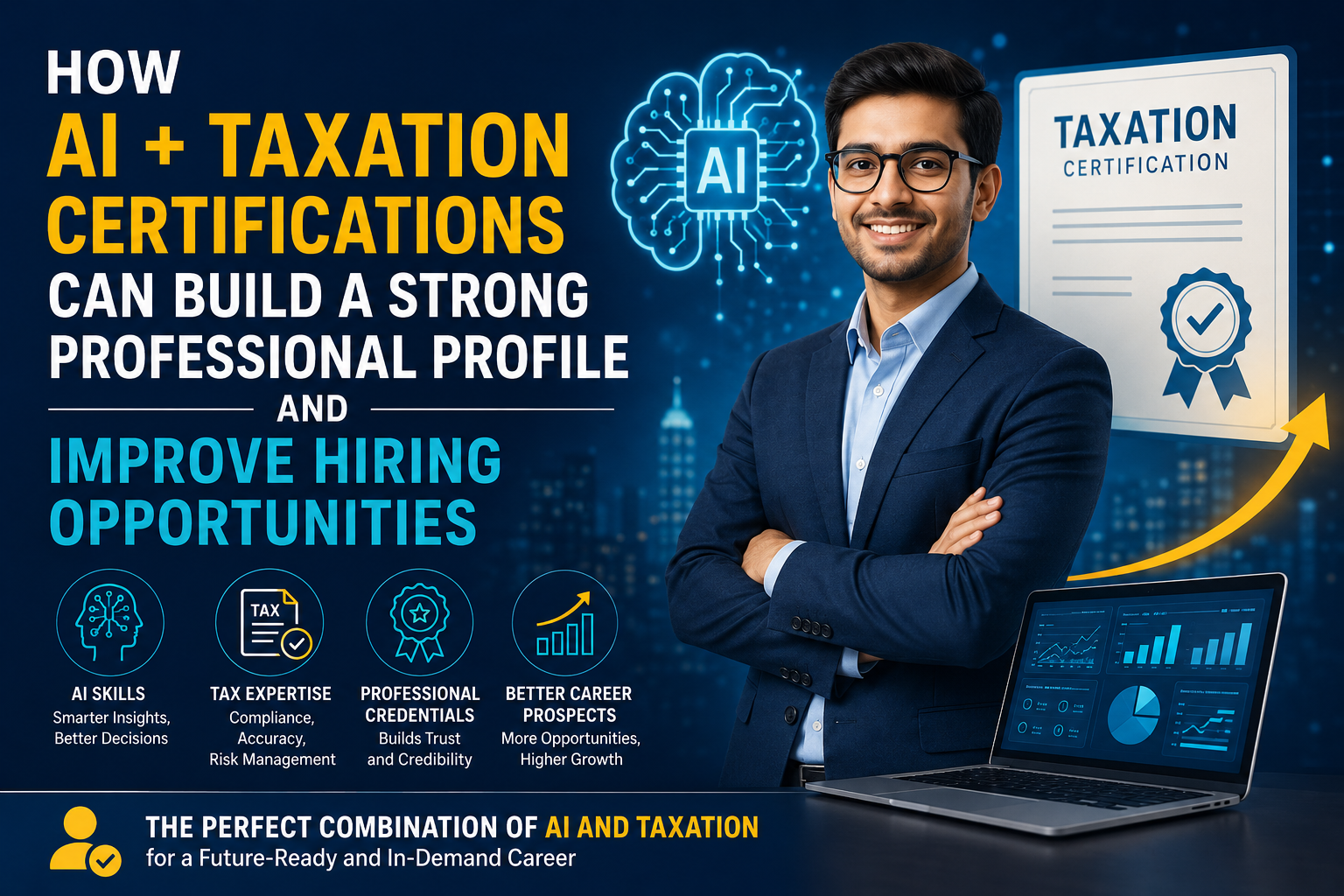
The taxation profession is evolving faster than ever before. For decades, tax professionals relied primarily on technical tax knowledge, manual research, spreadsheets, and traditional workflows. Today, however, the industry is experiencing a major transformation driven by Artificial Intelligence (AI), automation, and digital technologies.CPA firms, tax practices, accounting firms, and outsourcing companies are increasingly adopting AI-powered tools to improve efficiency, reduce turnaround times, and deliver better client experiences. As a result, employers are no longer looking only for candidates who understand taxation. They are actively seeking professionals who can combine tax expertise with modern technology skills.This shift presents an incredible opportunity for students, accountants, Enrolled Agent (EA) candidates, tax professionals, and finance graduates. By gaining expertise in both taxation and AI, professionals can build a stronger profile, stand out in the job market, and significantly improve their career prospects.The Growing Demand for AI-Enabled Tax ProfessionalsTax firms today handle thousands of returns, client communications, audit responses, tax research assignments, and compliance-related tasks. Many of these processes involve repetitive activities that can now be streamlined using AI tools.Professionals who understand how to leverage AI can:Conduct tax research fasterDraft client emails efficientlyAutomate documentation processesAnalyze tax scenarios more effectivelyImprove reporting and workflow managementReduce manual effort and human errorsDeliver higher-quality client serviceFor employers, hiring professionals with AI skills means increased productivity and better operational efficiency. This is why AI-enabled tax professionals are becoming highly desirable in the market.Why Tax Knowledge Alone Is No Longer EnoughTraditional taxation knowledge remains extremely important. However, in today's competitive environment, technical knowledge alone may not be sufficient to differentiate candidates.Employers increasingly prefer candidates who can:Adapt to new technologyWork with AI-powered systemsImprove business processesSolve problems efficientlyDeliver value beyond compliance workLearning AI tools such as ChatGPT, Claude, and Microsoft Copilot demonstrates that a candidate is future-focused and ready to contribute in a modern tax environment.This combination of taxation and technology creates a powerful professional advantage.Practical Certifications Create Real Career ValueOne of the biggest challenges facing students and professionals is bridging the gap between theory and practical application.Courses such as:AI in US TaxAI in Taxation ProgramAI-Enabled EA Professional Certificationfocus on practical implementation rather than just concepts.Participants learn:AI-powered tax researchIndividual taxation workflowsBusiness tax analysisIRS representation processesAudit preparationPrompt engineeringWorkflow automationReal-world tax case studiesThis practical exposure helps candidates become job-ready and gives them confidence in handling actual client scenarios.How These Certifications Strengthen Your ResumeRecruiters and hiring managers often review hundreds of resumes for a single position. Candidates who can showcase AI-enabled taxation skills immediately attract attention.These certifications help professionals:Demonstrate Modern SkillsEmployers recognize that AI skills are becoming essential for future tax professionals.Show Practical KnowledgeReal-world case studies and workflow training demonstrate hands-on capabilities.Increase Professional CredibilityCertifications reflect a commitment to continuous learning and professional development.Differentiate from CompetitionMany candidates possess tax knowledge, but relatively few have practical AI-tax integration skills.Prepare for Leadership RolesProfessionals who understand both taxation and technology are often better positioned for future management and advisory roles.Benefits for Students and Fresh GraduatesStudents entering the job market often struggle due to a lack of practical experience. AI-focused taxation certifications help overcome this challenge by providing exposure to real-life tax scenarios and modern workplace tools.Benefits include:Improved employabilityBetter interview performanceGreater confidenceIndustry-relevant skillsStronger professional profileThese advantages can significantly improve the chances of securing opportunities with CPA firms, tax firms, and outsourcing organizations.Benefits for Experienced ProfessionalsExperienced professionals also benefit greatly from AI-driven tax education.AI helps professionals:Increase productivityHandle larger workloadsImprove accuracyReduce repetitive tasksFocus on advisory servicesStay relevant in a changing industryProfessionals who embrace AI are likely to experience stronger career growth and increased opportunities in the coming years.The Future of Taxation Is AI-AssistedThere is a common misconception that AI will replace tax professionals. The reality is quite different.AI is unlikely to replace skilled tax professionals. Instead, tax professionals who effectively use AI will outperform those who do not.The future belongs to professionals who can:Combine technical expertise with technologyDeliver faster client solutionsCreate efficient workflowsAdapt to changing business environmentsAs firms continue investing in automation and digital transformation, the demand for AI-enabled tax professionals will continue to grow.ConclusionThe combination of taxation expertise and AI skills is rapidly becoming one of the most valuable career assets in the accounting and tax industry. Whether you are an EA student, accountant, finance graduate, tax consultant, or firm owner, investing in AI-focused tax certifications can significantly strengthen your professional profile.By mastering both taxation and AI, professionals can improve employability, increase productivity, unlock better career opportunities, and position themselves as future leaders in the tax profession.The future of taxation is not just about knowing the tax lawβ€”it is about knowing how to leverage technology to apply that knowledge more effectively. Those who embrace AI today will be the professionals who lead the industry tomorrow.#AIForTaxProfessionals #TaxAutomation #ArtificialIntelligence #USATaxation #EnrolledAgent #EAExam #TaxCareer #CPA #CMA #AccountingProfessionals #FinanceCareer #TaxIndustry #TaxPreparation #FutureOfWork #PromptEngineering #BusinessAutomation #TaxTechnology #CareerGrowth #ProfessionalDevelopment #OnlineLearning #Upskill #TaxConsultant #AccountingCareer #IRSRepresentation #TaxResearch 

Beyond the Badge: The Growth Path of an Enrolled Agent in India
May 18, 2026

Beyond the Badge: The Growth Path of an Enrolled Agent in India

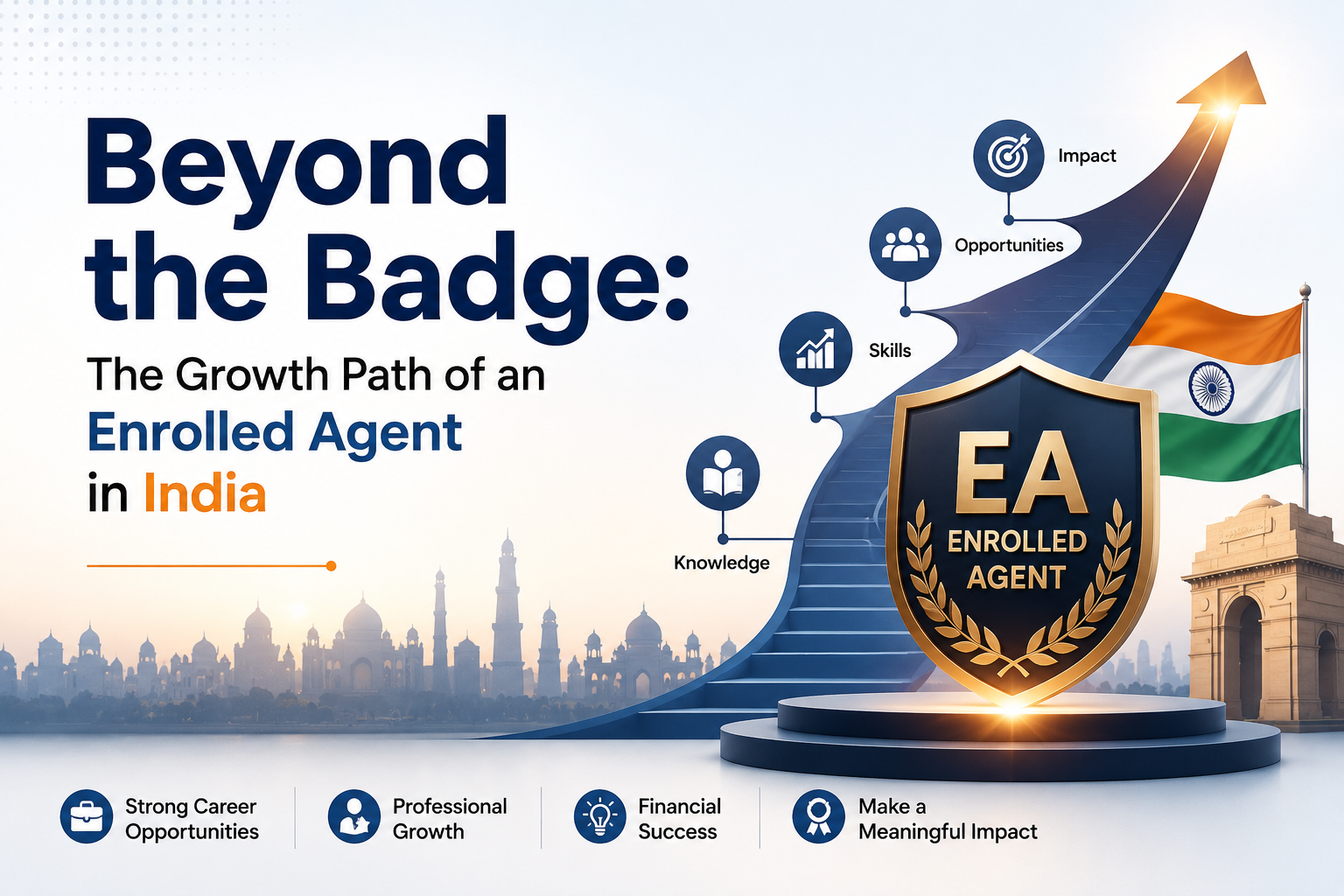
You passed all three parts of the SEE. The IRS approved your application. You're officially an Enrolled Agent. Now the real question β€” what do you do with it? Earning the Enrolled Agent (EA) credential is one of the most respected achievements in the world of US taxation. Granted by the Internal Revenue Service (IRS), it is the highest credential the IRS awards to tax professionals β€” sitting above CPAs and attorneys when it comes to federal tax representation rights. In India, where the US accounting and tax outsourcing industry has exploded over the past decade, becoming an EA is a career-defining move.But once the certificate arrives and the title is yours, many newly minted EAs in India wonder: What comes next? Where does this take me?The answer is β€” quite far. The First Chapter: Entry Into the US Tax EcosystemThe most immediate opportunity for a certified EA in India is within the KPO (Knowledge Process Outsourcing) and accounting outsourcing sector. Cities like Bengaluru, Hyderabad, Pune, Chennai, and Ahmedabad are home to hundreds of firms β€” from Big Four delivery centers to mid-sized CPA firm back-offices β€” that serve US-based clients.As a freshly certified EA, you step into roles with real credibility:Tax Analyst / Senior Tax Analyst β€” Preparing and reviewing individual and business tax returns (1040, 1120, 1065, 1120S)Tax Reviewer β€” QA-ing work prepared by non-credentialed staffIRS Correspondence Specialist β€” Handling notices, letters, and compliance queries on behalf of US clientsThe EA credential immediately sets you apart from colleagues who are simply trained in tax preparation. It signals to employers that you have passed a rigorous, federally recognised examination and are legally authorised to represent taxpayers before the IRS β€” audit support, collections, appeals included. That distinction matters from day one. Growing Into the Role: Years 2 Through 5As experience accumulates, an EA's value grows rapidly. The combination of credential and hands-on exposure to US tax law opens doors that remain closed to most finance professionals in India.Specialisation becomes your biggest lever during this phase. US taxation is vast β€” and EAs who develop deep expertise in a niche command premium positioning:Individual Taxation (1040) β€” High-net-worth clients, expat tax, foreign income reportingBusiness Taxation β€” S-Corps, Partnerships, C-Corps, multi-state filingsIRS Representation β€” Audit defence, Offer in Compromise (OIC), penalty abatement, tax collectionsInternational Taxation β€” FBAR, FATCA, cross-border transactions, transfer pricing basicsEstate & Trust Taxation β€” 1041 filings, estate planning supportPayroll & Employment Tax β€” 941s, 940s, and compliance for US businessesEAs who become specialists β€” rather than generalists β€” are far better positioned for senior roles, higher billing rates, and direct client relationships. The Career Ladder: Where EAs Go in IndiaThe growth trajectory for an Enrolled Agent in India is both structured and flexible:Tax Associate β†’ Senior Tax Associate β†’ Tax Manager β†’ Assistant Manager / Manager β†’ Senior Manager β†’ Director of Tax / Head of US Tax PracticeAt the managerial level, EAs are not just reviewing returns β€” they are leading teams, managing client relationships, driving quality processes, and often serving as the bridge between Indian delivery teams and US CPA firms or end clients. This is where the EA credential truly shines, because representing clients before the IRS requires specific authorisation that no amount of experience alone can substitute.Beyond the corporate ladder, many experienced EAs in India make the leap to independent practice β€” offering US tax advisory, bookkeeping, and IRS representation services to American clients directly, either as sole practitioners or as partners in small tax boutiques. With the rise of cloud accounting tools like Drake, Lacerte, UltraTax, and ProConnect, serving US clients from India has never been more accessible. The India Advantage in US TaxationIndia produces some of the world's most capable tax professionals, and the US outsourcing market knows it. The time zone overlap with the US, India's deep bench of commerce and accounting graduates, and the maturity of the KPO sector create a uniquely fertile environment for EA-certified professionals.The financial rewards reflect this. An EA with 3–5 years of experience in India's metro cities typically earns between β‚Ή8–18 lakhs per annum, with senior managers and directors often crossing β‚Ή25–40 lakhs. EAs who build independent client practices or move into consulting can earn well beyond that β€” especially when billing in US dollars. Keeping the Credential Alive: CPE and Continuous LearningThe IRS requires every active EA to complete 72 hours of Continuing Professional Education (CPE) every three years, including a minimum of 16 hours per year, with 2 hours in ethics. This is not just a compliance checkbox β€” it is a built-in mechanism that keeps EAs current with tax law changes, IRS procedural updates, and evolving client needs.Smart EAs use CPE strategically. Choosing courses in emerging areas β€” like cryptocurrency taxation, international compliance, or digital business structures β€” turns a renewal requirement into a competitive advantage. Beyond Tax: Adjacent Paths for Enrolled AgentsThe analytical depth and regulatory fluency that EA training builds opens doors beyond pure tax work:Financial Planning & Advisory β€” Collaborating with financial planners on tax-efficient investment strategiesAccounting Firm Leadership β€” Building or managing US-facing accounting practices in IndiaTax Technology β€” Advising on tax software implementation, workflow automation, and compliance toolsTeaching & Training β€” Becoming an EA prep instructor or building a tax training academyContent & Thought Leadership β€” Writing, podcasting, or consulting on US tax topics for a growing online audience The Bottom LineThe Enrolled Agent credential is not a certificate that gathers dust on a wall. In India's thriving US tax services ecosystem, it is a working, living advantage β€” one that opens senior doors faster, enables direct client representation, and signals a level of federal tax expertise that is genuinely rare.The path after certification is not a single straight road. It branches into specialisations, leadership, independent practice, and influence. Where you take it depends entirely on the ambition and focus you bring to it.You earned the right to represent taxpayers before the most powerful tax authority in the world. That's not a small thing. Now go build something worthy of it. #EnrolledAgent #EnrolledAgentIndia #EACertification #USTaxation #IRSCredential #TaxProfessional #TaxCareer #CareerInTax #TaxConsultant #USTaxProfessional #EnrolledAgentCareer #TaxCertification #IRSRepresentation #TaxSpecialist #AccountingCareers #FinanceCareers #KPOIndia #AccountingOutsourcing #USTaxIndia #TaxManager #TaxAdvisor #InternationalTax #TaxPlanning #CPECredits #TaxLaw #TaxReturns #IndianTaxProfessionals #CareerGrowth #FinanceProfessionals #TaxAndAccounting #AccountingJobs #TaxJobs #CareerDevelopment #ProfessionalGrowth #TaxExperts #USAccounting #TaxCommunity #SEEExam #IRSEnrolledAgent #TaxEducation

The New EA Exam Era: PSI vs. Prometric
May 10, 2026

The New EA Exam Era: PSI vs. Prometric

Is Home-Based Testing a Blessing or a Burden?Big changes are coming to the Enrolled Agent (EA) world. Starting March 1, 2026, the IRS is officially moving the Special Enrollment Examination (SEE) from Prometric to PSI Services LLC. While the four-month testing blackout (March through June 2026) is making headlines, the real buzz is about the launch of Remote Online Proctoring starting in July 2026.For the first time, candidates, especially those in international locations like India, can skip the airport and take the exam from their own desks. But before you cancel your hotel reservation, it's important to look past the "convenience" and understand the high-stakes trade-offs of testing at home. The Perks: Why Everyone is ExcitedThe move to home-based testing solves the biggest logistical headaches for candidates who don't live near a major testing hub.Massive Cost Savings: No more $200 hotel stays or $300 flights just to sit for a 3.5-hour exam.Familiar Environment: You can use your own computer, your own ergonomic chair, and your own keyboard.Zero Commute Stress: You don’t have to worry about morning traffic, finding parking, or arriving 45 minutes early at a testing center just to stand in line for a security pat-down.Wider Availability: PSI’s remote option effectively opens the exam to every corner of the globe, provided you have a stable internet connection.Customized Climate Control: Anyone who has taken an exam in a freezing Prometric center knows the struggle. At home, you control the thermostat, ensuring you aren't shivering through Section 10.1 of Circular 230. The Reality Check: The "Prison" of Remote ProctoringWhile "home-based" sounds relaxed, the security protocols for PSI’s remote exams are often stricter than a physical testing center. The transition from a human proctor in a room to an AI-enhanced monitor via webcam introduces some intense disadvantages:1. The "Stone Statue" Rule (Eye Movement)This is the biggest shock for most test-takers. In a testing center, you can look up at the ceiling to think or stretch your neck. In a home-based PSI exam, if your eyes leave the screen for even a few seconds, the AI can flag you for cheating.The Risk: Repeatedly looking away or even glancing at the door can lead to your exam being terminated instantly with no refund.2. Technical Responsibility is on YOUAt Prometric, if the internet goes down, it's their problem. At home, it's your problem.The Bandwidth Trap: If your Wi-Fi flickers or your roommate starts streaming Netflix, your connection to the proctor might drop.The System Lock: You must pass a rigorous PSI system inspection. If your webcam isn't high-definition enough or your OS updates mid-exam, you're in trouble.3. The "Empty Box" Room RequirementYour "home" environment must look like a sterile lab.The 360Β° Scan: You have to use your webcam to show the proctor every corner of the room, including under your desk.Clutter Restrictions: Bookshelves must be covered, extra monitors must be unplugged/turned around, and the room must be completely silent. If a family member walks in or a dog barks, you risk disqualification.4. Physical Restrictions & FatigueNo Mouth Movement: Many people whisper or move their lips while reading complex tax scenarios. Remote proctors often flag this as "communicating with someone off-camera."Scratch Paper Issues: While some remote exams allow a physical whiteboard, others force you to use a clunky "on-screen notepad," which can be a nightmare for the math-heavy calculations in Part 2 (Businesses).Increased Mental Strain: The added anxiety of maintaining a "perfect posture" and unblinking gaze can lead to faster mental fatigue compared to the relatively relaxed (though supervised) atmosphere of a physical center. Navigating the Technical HurdlesTo successfully test with PSI at home, you don't just need a laptop; you need a dedicated testing station. PSI requires a specific system inspection that checks your CPU usage, RAM availability, and background processes.Candidates must ensure that all "unauthorized" software, like Grammarly, Discord, or even certain antivirus pop-ups, are completely disabled. A single notification appearing on your screen during the exam could be interpreted as external assistance, leading to an immediate fail. This puts a significant burden on candidates who aren't tech-savvy, turning a tax exam into an IT troubleshooting nightmare. Final Verdict: Should You Stay or Go?FeatureHome-Based (PSI Remote)Testing Center (PSI Physical)ComfortHigh (Your own chair/desk)Low (Standard office setup)Tech RiskHigh (You are the IT support)Low (Center handles everything)MovementRestricted (Eyes on screen)Moderate (Standard supervision)TravelNoneRequiredThe Bottom Line: If you live within an hour of a PSI testing center, the physical center is still the safest bet for your first attempt. It removes the "technical anxiety" and allows you to focus 100% on the tax law. However, if you are an international candidate or hours away from a city, the remote option is a game-changer, just be prepared to sit very, very still.

Why CMA USA is the Gold Standard for Accountants
April 22, 2026

Why CMA USA is the Gold Standard for Accountants

Elevate Your Professional StandingThe Certified Management Accountant (CMA) credential from the USA is recognized globally as the gold standard in management accounting. It validates your expertise in financial planning, analysis, control, and decision support.Why Choose CMA USA?Global Career Mobility in 150+ countriesHigher Earning Potential (average 30% increase)Networking with 100,000+ IMA membersJoin our upcoming batch to start your journey toward this prestigious certification.

Top 5 High-Paying Careers in Global Finance for 2026
April 22, 2026

Top 5 High-Paying Careers in Global Finance for 2026

The finance industry is evolving rapidly. As we look toward 2026, certain roles are standing out for their high demand and exceptional compensation packages.The Most In-Demand Roles:Investment Banker / M&A AdvisorEnrolled Agent (EA) & Tax StrategistCMA, Management Accountant & CFO TrackTax Technology & AI Automation SpecialistHedge Fund / Private Equity AnalystOur curriculum is specifically designed to prepare you for these elite career paths by focusing on the skills that international employers value most.The global finance industry is undergoing its most dramatic transformation in decades. Artificial intelligence is reshaping entire job categories, tax regulations are growing more complex by the year, and the professionals who combine deep credentials like the EA and CMA with technological fluency are pulling away from the pack in earnings. Here are the five careers you should know about. Investment Banker / M&A AdvisorLet's start at the top. Investment banking remains the aspirational summit of finance careers, and for good reason: the pay is stratospheric, the deals are headline-making, and the skills required are genuinely elite. But what's changed in 2026 is which skills move the needle most.Yes, you still need the financial modelling chops and the stamina for 80-hour weeks during deal season. But increasingly, the highest-paid bankers are those who understand the tax architecture of a deal as deeply as its valuation. That's where the Enrolled Agent (EA) credential quietly enters the picture. Senior bankers with EA licensing can personally navigate IRS compliance on cross-border acquisitions a capability that used to require outside tax counsel. Meanwhile, the CMA credential sharpens cost-performance analysis during due diligence, giving firms an edge on post-merger integration modelling. Enrolled Agent (EA) & Tax Strategist If you're not familiar with the Enrolled Agent credential, you should be. The EA is the only federally licensed tax practitioner with unlimited IRS representation rights, technically out-scoping CPAs and attorneys in pure tax practice. You earn it by passing the three-part Special Enrollment Examination (SEE) administered by the IRS itself.In 2026, EAs who specialise in complex tax return filing and resolution are in remarkable demand. The appetite for international tax planning, driven by the explosion in remote workers, digital nomads, and cross-border business structures, has created a shortage of qualified practitioners that shows no sign of easing.If you want to enrol, let's connect with the India's best EA academy. What Makes EA the Hidden GemWhile CPAs often serve as generalist accountants who also do taxes, an EA is a pure tax professional. The credential unlocks audit defense, offer-in-compromise negotiations, collection appeals, and penalty abatement requests services that clients pay premium rates for, especially in IRS examination years. "The EA credential is the most underrated licence in finance, unlimited IRS authority, growing demand, and AI making the best practitioners exponentially more productive." CMA, Management Accountant & CFO Track The Certified Management Accountant (CMA), awarded by the Institute of Management Accountants (IMA), is the credential that separates the strategic finance leaders from the bookkeepers. According to IMA's 2025 salary survey, CMAs earn 58% more than their non-certified counterparts globally, one of the most striking credential premiums in any profession.The two-part CMA exam covers financial planning, performance management, cost analysis, and strategic management. What makes the designation especially relevant in 2026 is that the IMA has embedded AI literacy as a core competency for the current exam cycle, recognising that management accountants who can work alongside machine learning tools will dominate the next decade.To know more about the USA CMA course details, connect with Shivangani Tandon: 17 years of experience in Taxation and Finance career building. Tax Technology & AI Automation SpecialistThis is the role that didn't really exist five years ago and is now one of the most sought-after positions across Big 4 firms, multinationals, and FinTech startups. The Tax Technology and AI Automation Specialist sits precisely at the intersection of finance credentials and software fluency, and the compensation reflects just how rare that combination is.These professionals don't just use AI tools; they build the pipelines that automate tax return filing at scale, design compliance monitoring systems, and ensure that AI-generated filings pass audit scrutiny. It's a role that demands both deep tax knowledge (EA or CPA licensing is increasingly expected) and genuine technical capability with Python, SQL, and machine learning frameworks. What Does the Work Actually Look Like?Imagine building a system that automatically classifies 50,000 vendor invoices, maps them to the correct tax treatment across 80 jurisdictions, pre-populates the relevant schedules in corporate tax returns, flags anomalies for human review, and generates audit-ready documentation, all before your EA colleagues arrive in the morning. That's a Tuesday for a good Tax Tech specialist. Hedge Fund / Private Equity Analyst Alternative investments, hedge funds, private equity, and venture capital, remain among the most lucrative corners of global finance, and the analysts who thrive in this world share one thing in common: they understand the complete picture. That means not just investment thesis and portfolio construction, but the tax implications of every structure they recommend.Partnership tax returns in this world are a universe of their own. Schedule K-1 preparation, carried interest characterisation, PFIC reporting for international holdings, and wash-sale rules across complex multi-asset portfolios, these filings are so intricate that many firms now actively recruit analysts with EA credentials or strong tax return experience, rather than relying entirely on external counsel. Stay connected with the latest updates in US Taxation and Finance careers with Shivangani Tandon Academy. 

The Future of AI in Accounting: Friend or Foe?
April 22, 2026

The Future of AI in Accounting: Friend or Foe?

Embracing the Digital TransformationArtificial Intelligence is no longer a futuristic concept; it is actively reshaping the accounting industry. From automated bookkeeping to predictive analytics, AI is enabling accountants to shift from data entry to strategic advisory roles.Key Benefits:Accuracy and Error ReductionReal-time Financial InsightsFraud DetectionThe successful accountant of tomorrow will be the one who knows how to leverage AI tools to provide deeper value to their clients.